

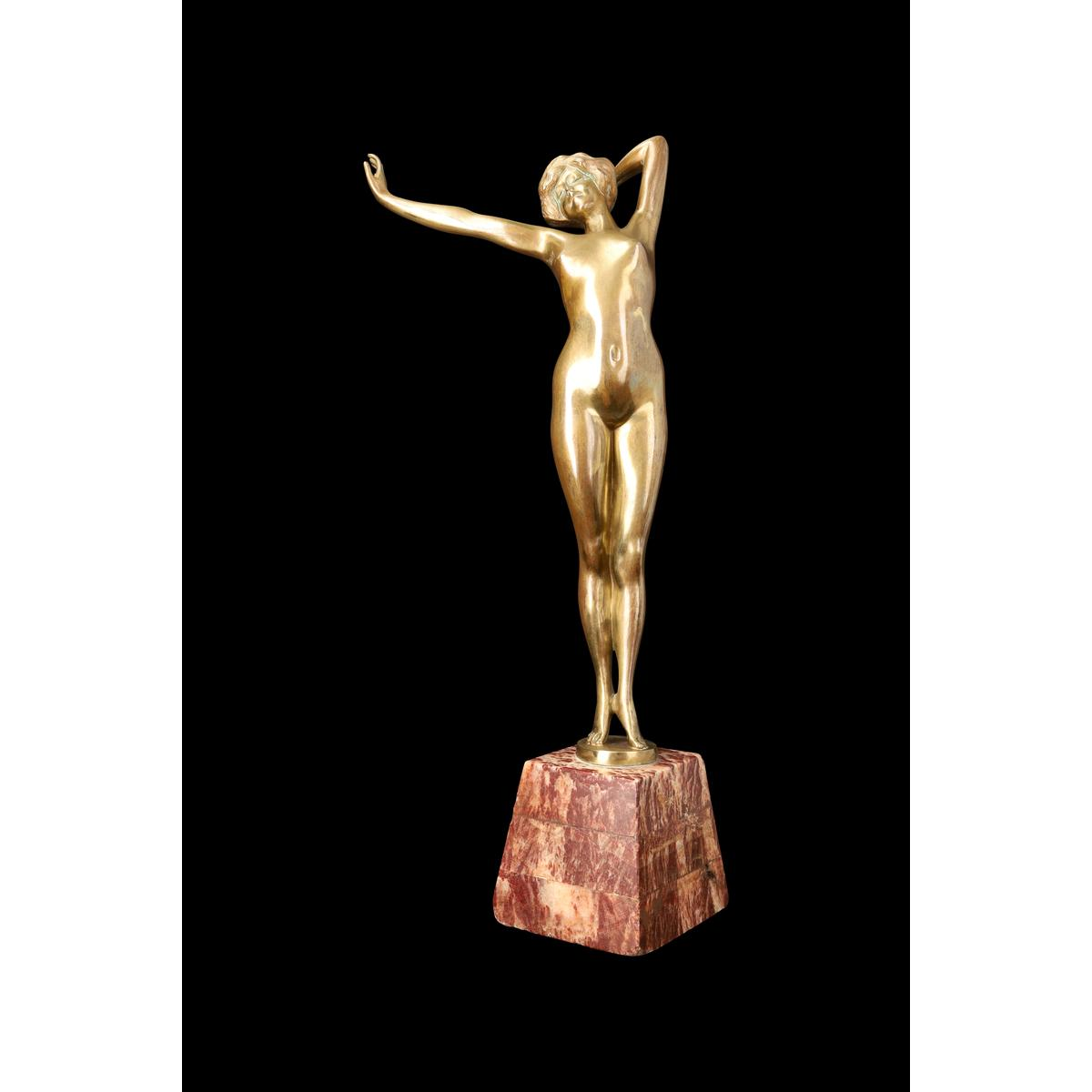
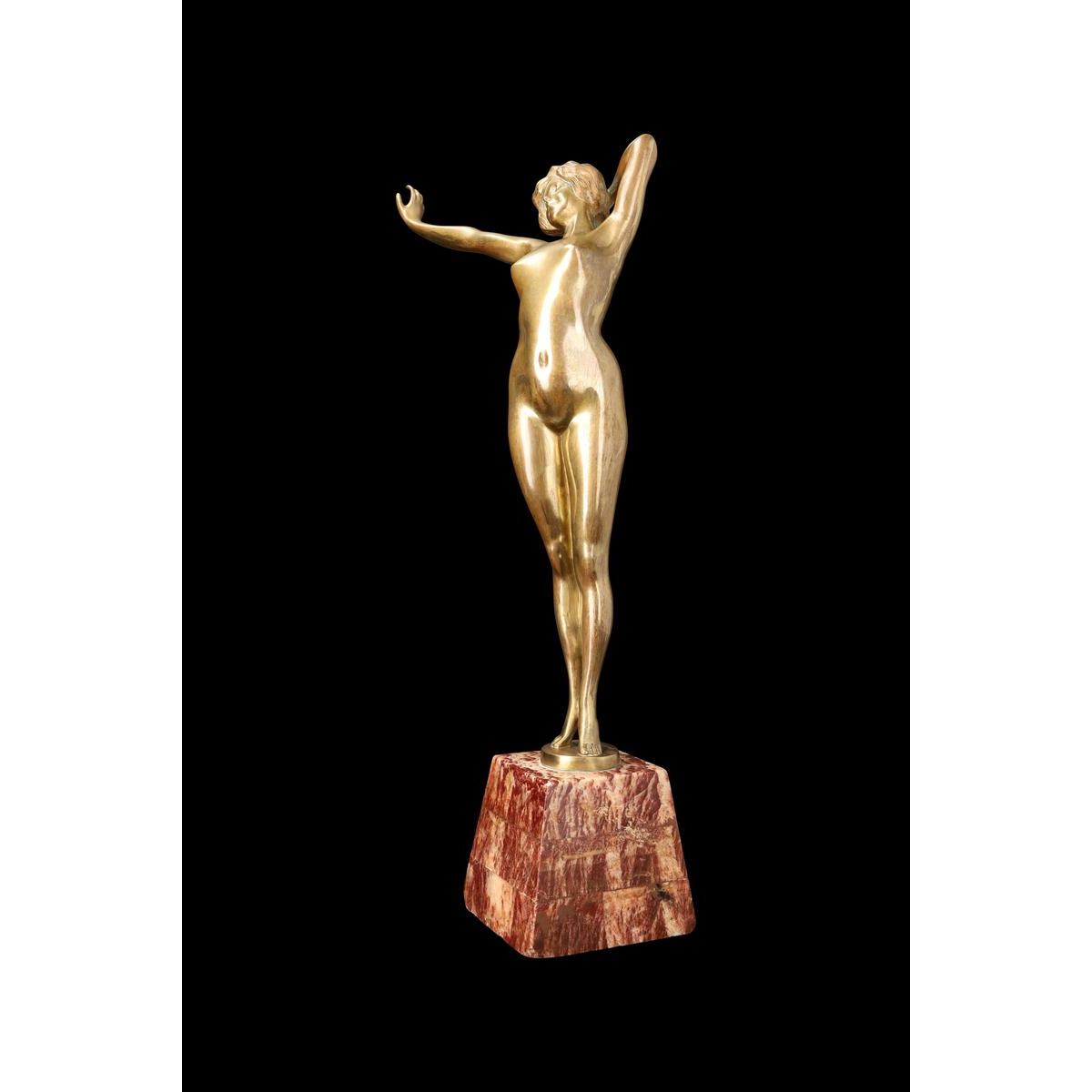
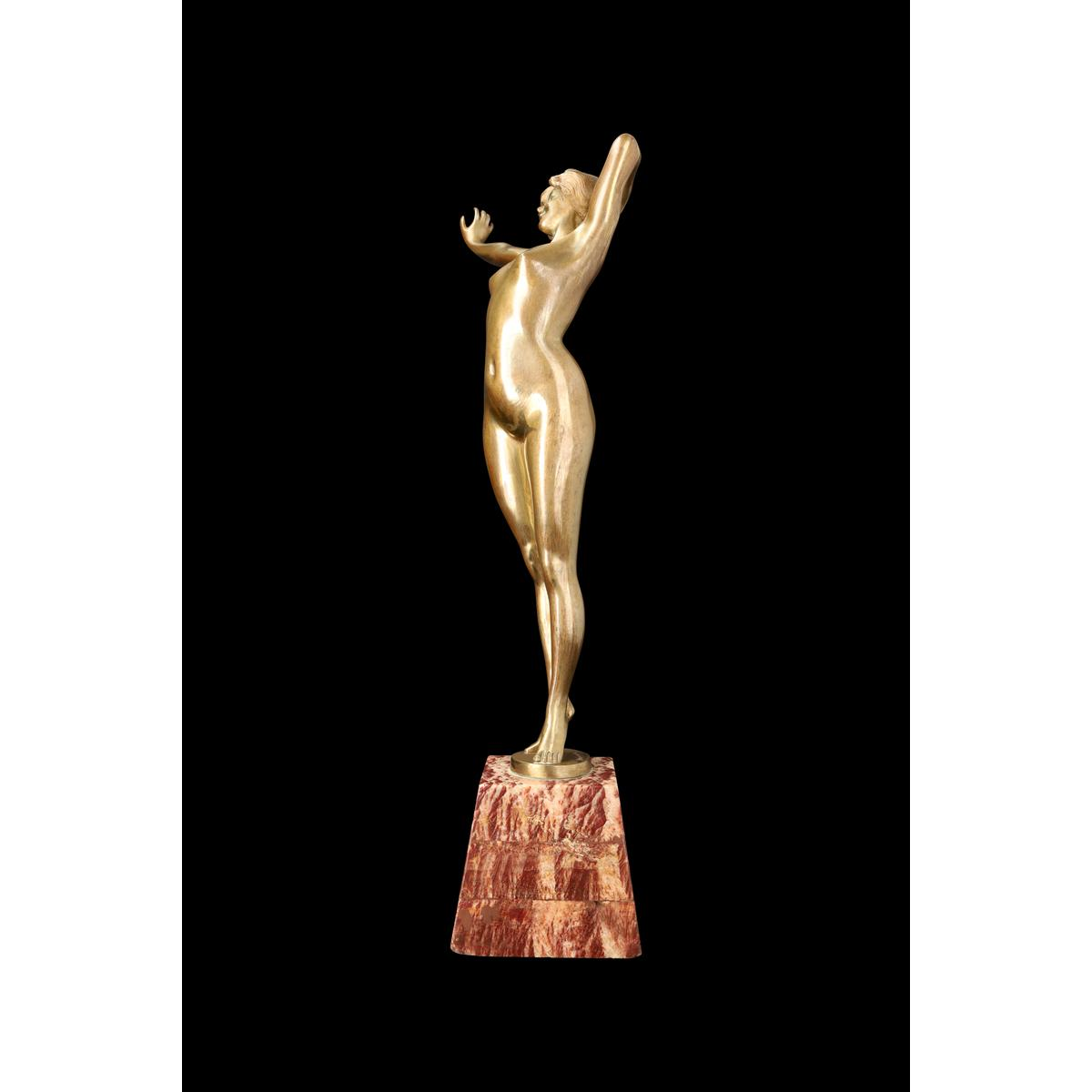

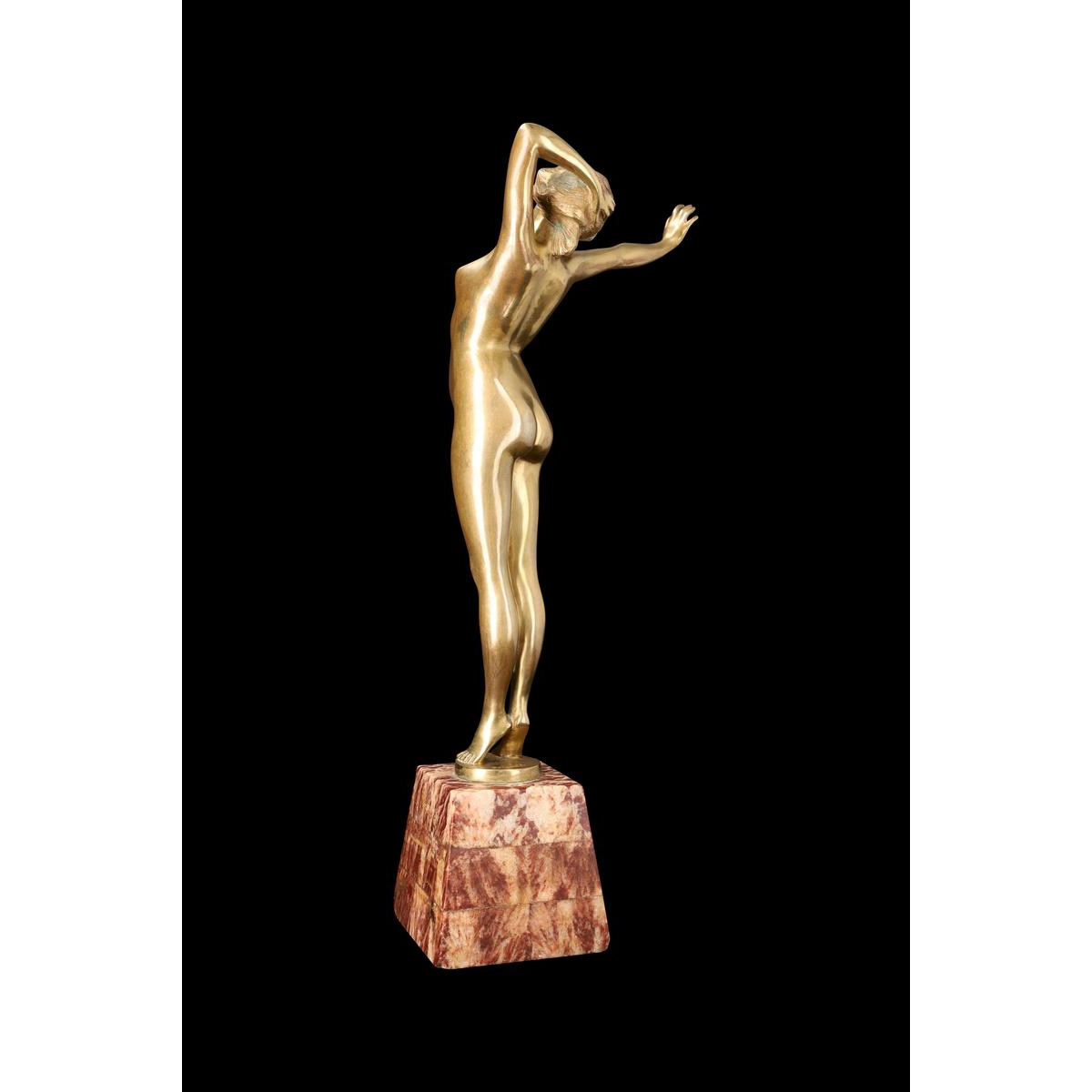
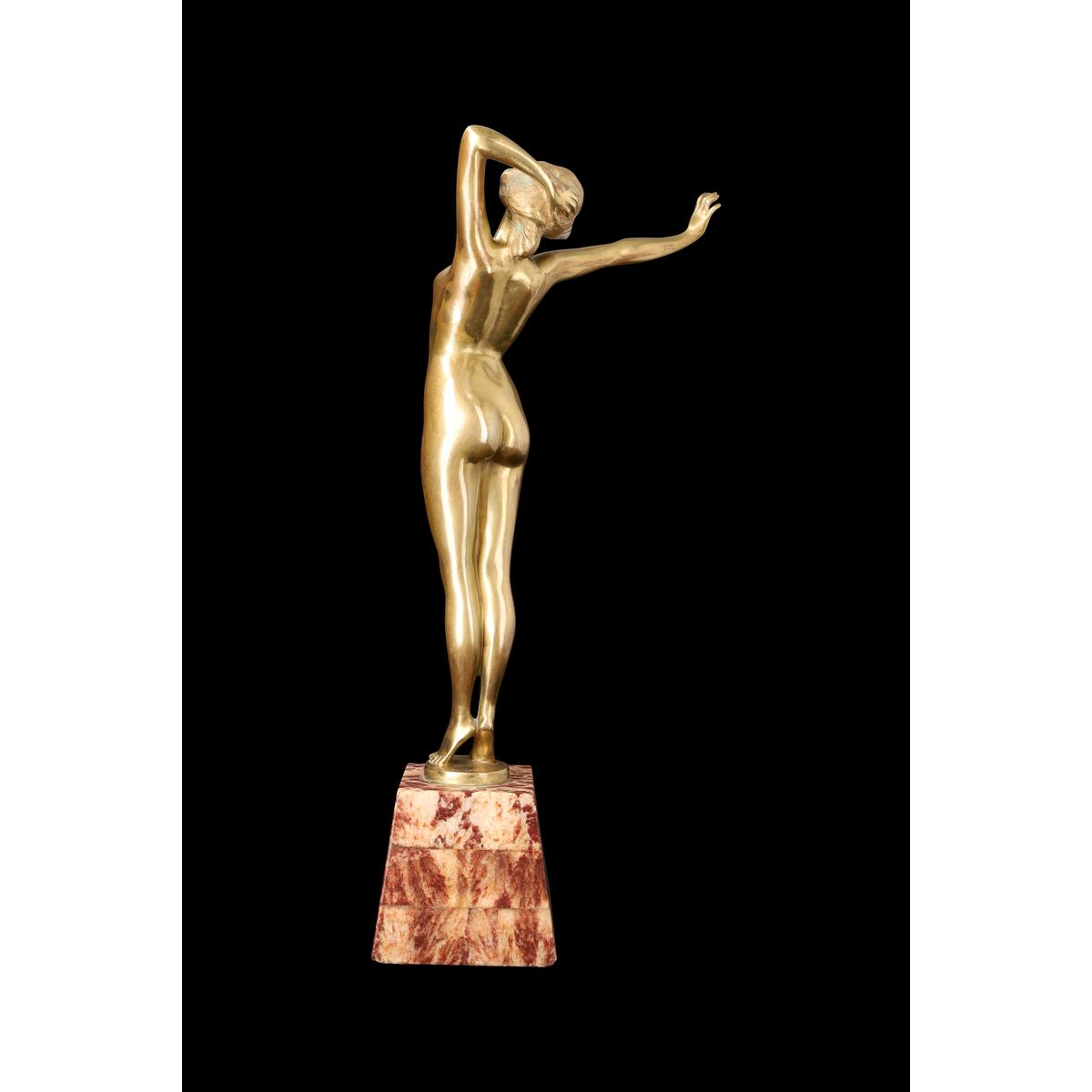
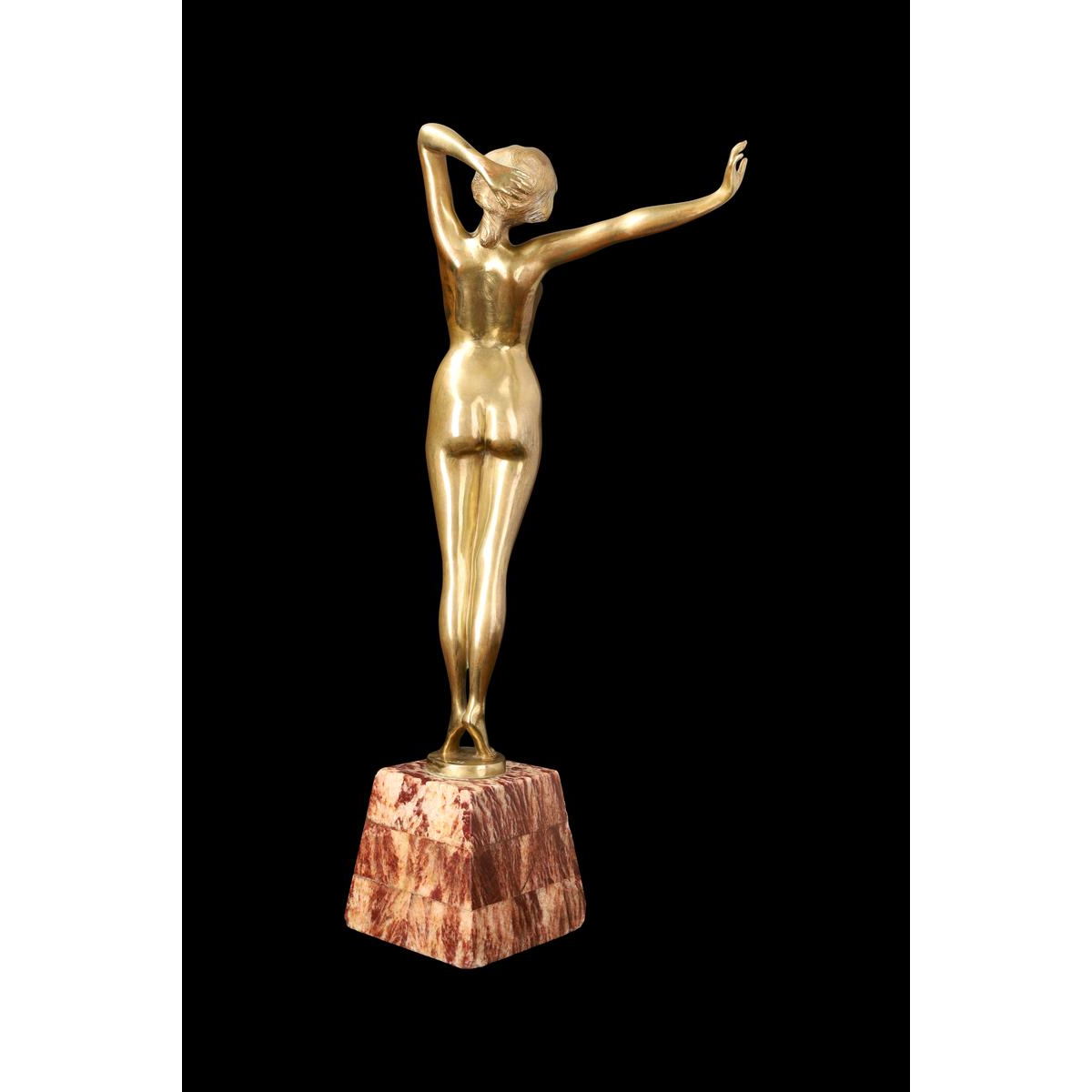
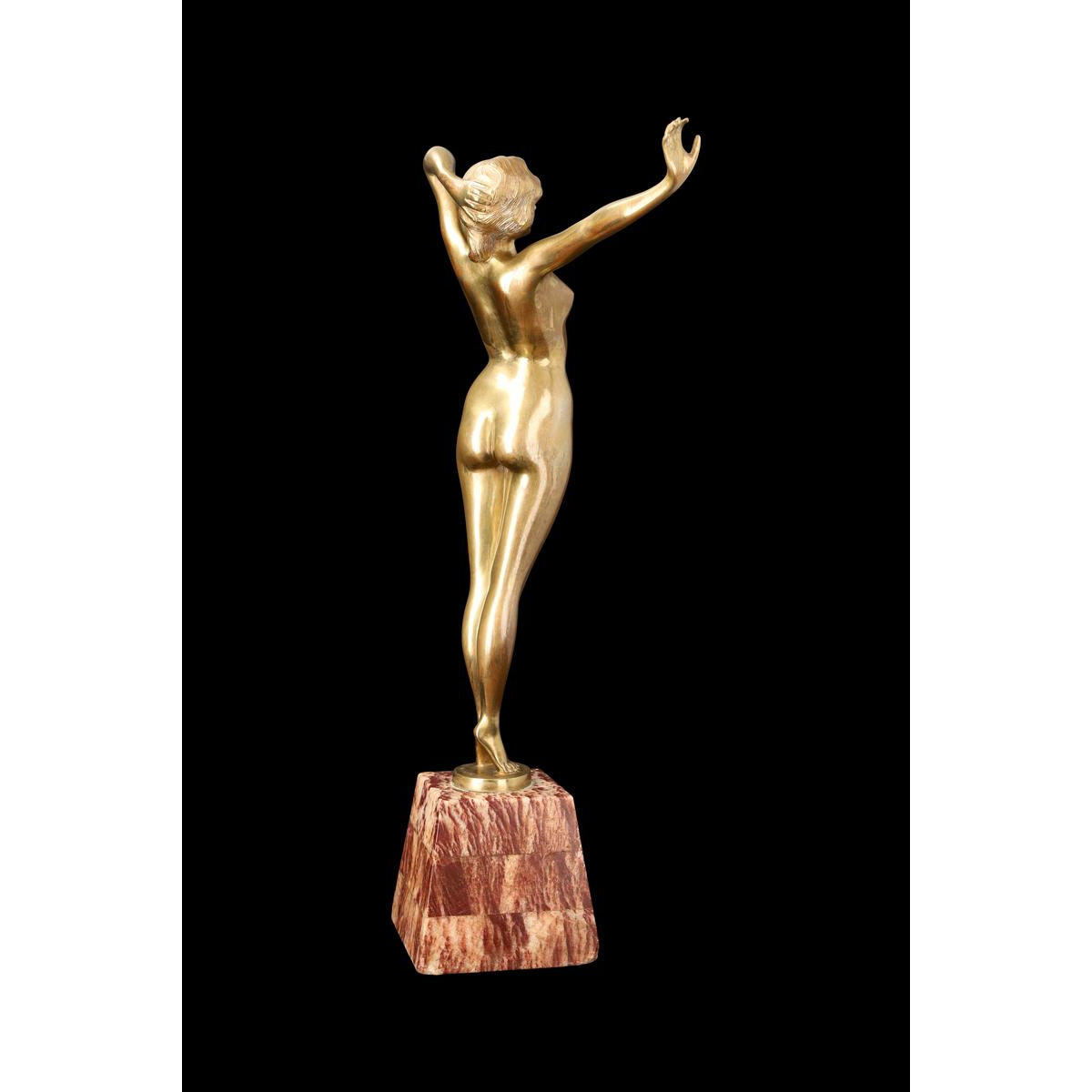
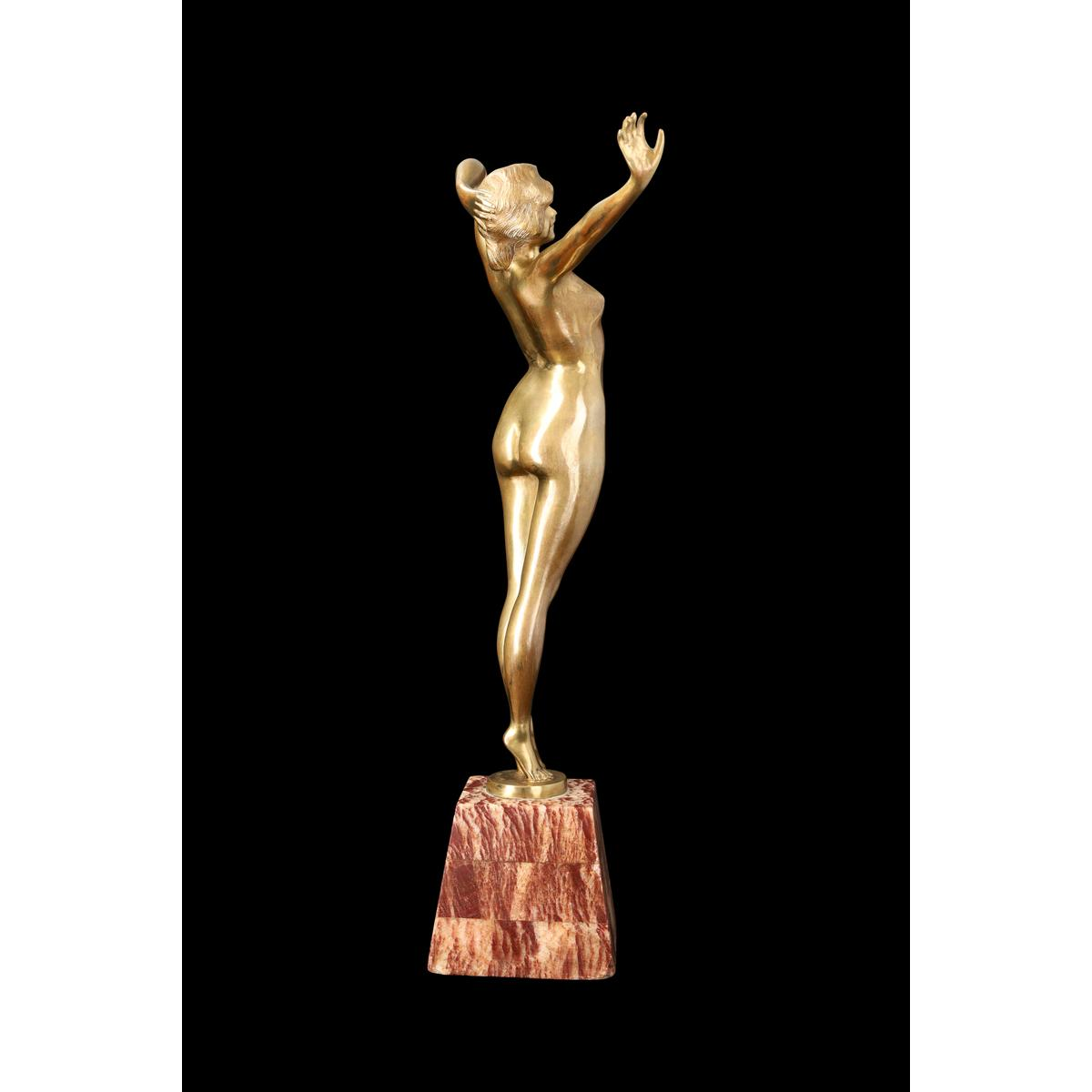
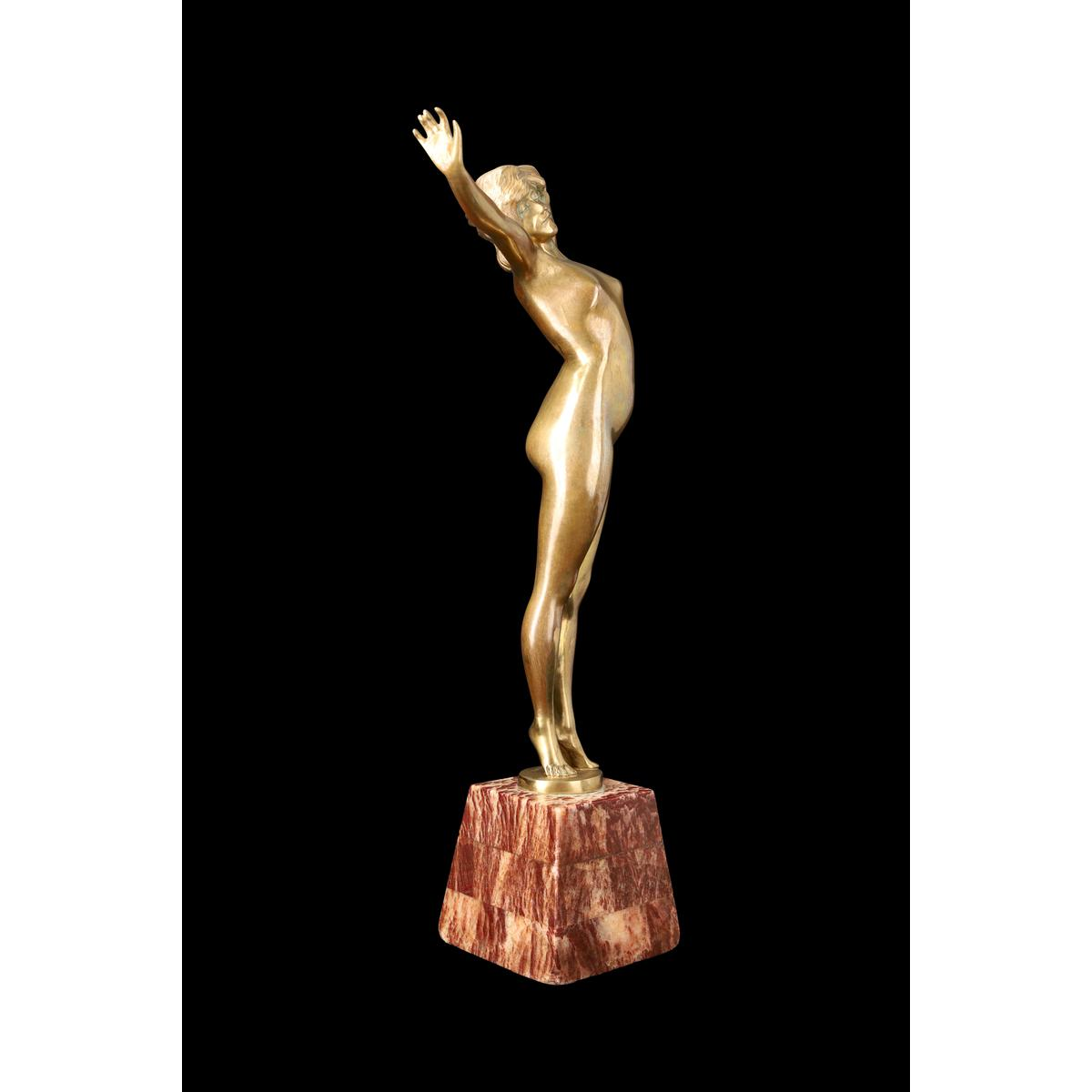
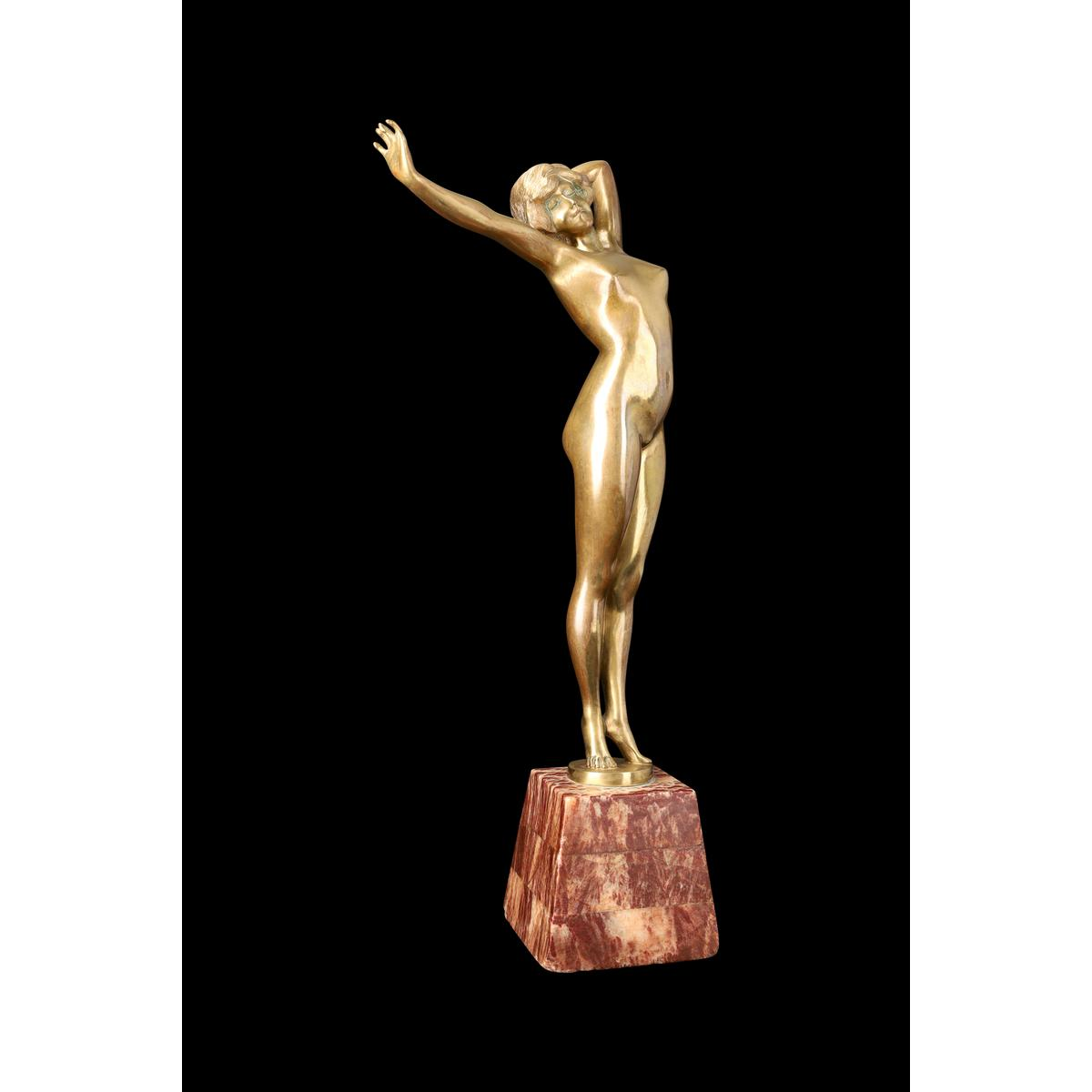
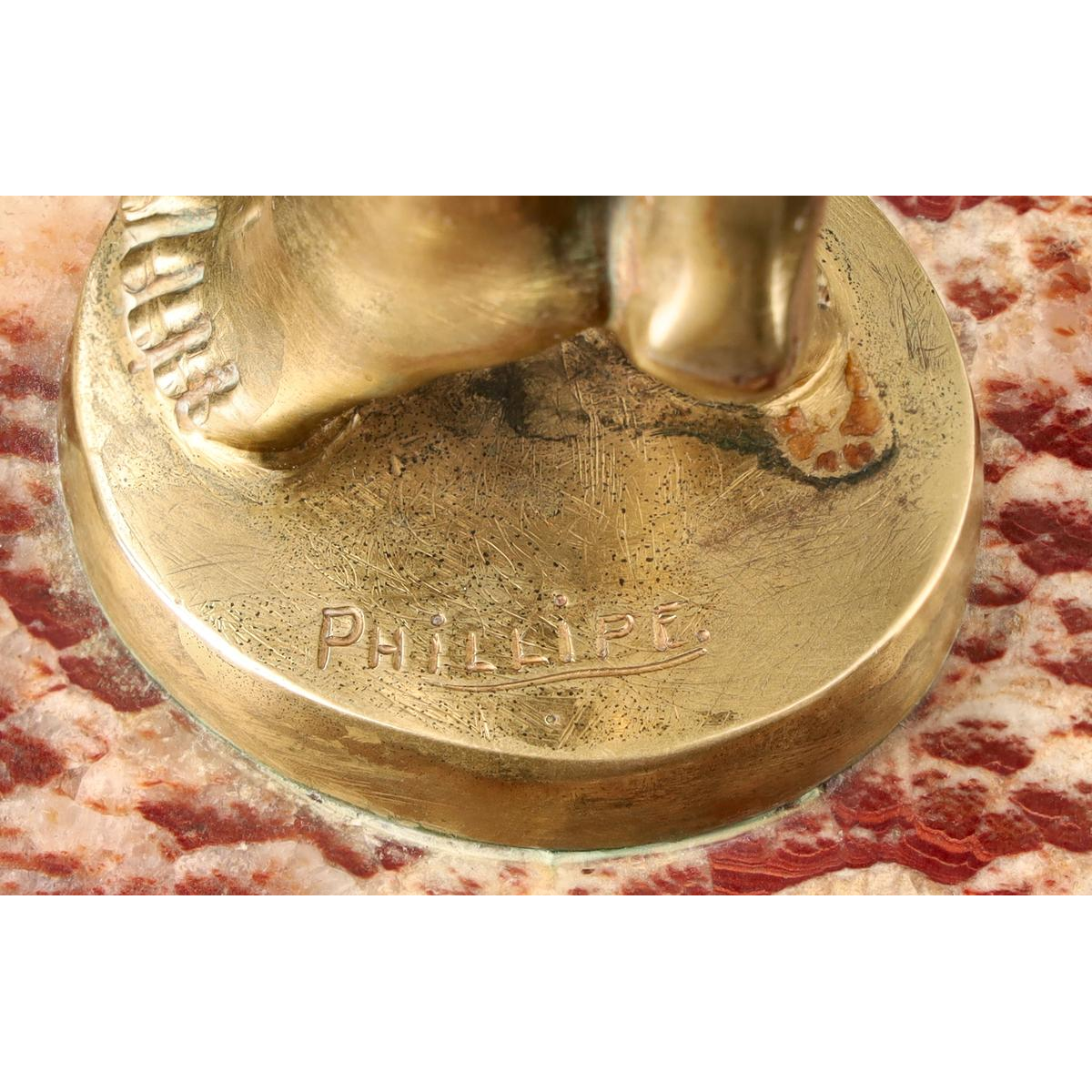
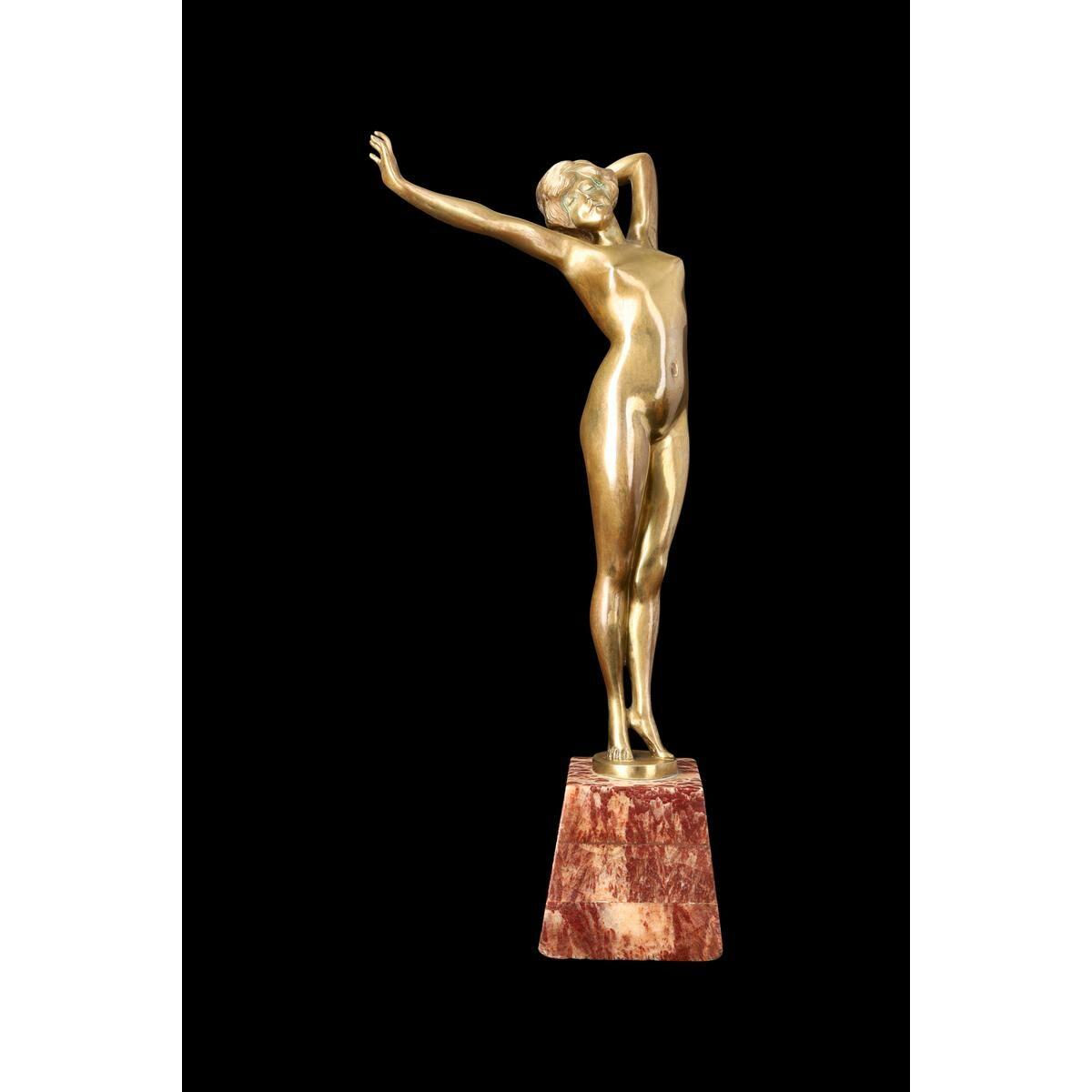

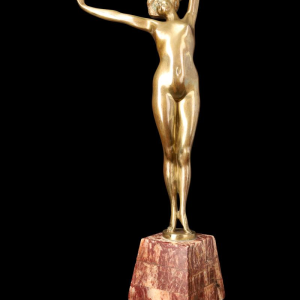
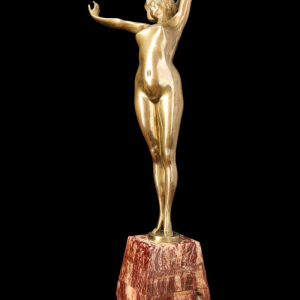



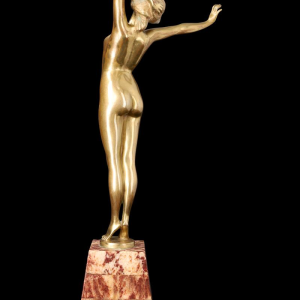
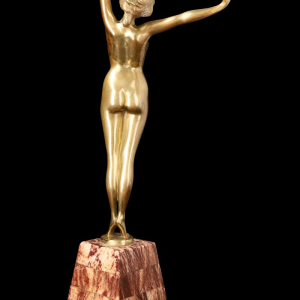
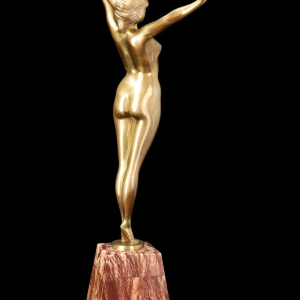
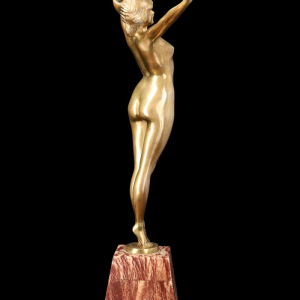

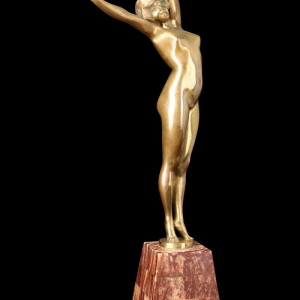
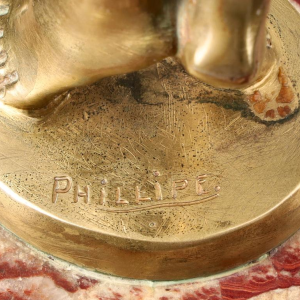

Gilt bronze sculpture "LE REVEIL" (The Awakening) by PAUL PHILIPPE (1870-1930)
-
Secure payment in 3 interest-free installments with Klarna
-
Fast and insured delivery
-
Easy 14-Day Return
EXPLANATIONS:
1. Description of the Work:
The sculpture is a nude female figure, made of bronze with a gilded or reddish-brown (bronzed) patina. It is mounted on a trapezoidal base of veined marble (the reddish-brown marble visible in the photos). The woman is depicted in a dynamic and expressive pose.
-
She is standing, slightly arched backward or stretched.
-
Both arms are raised above her head, with the left hand holding or brushing the back of her neck and the right arm extended upwards, palm open, in a gesture of call or awakening.
-
The overall posture expresses a movement of waking up, a morning stretch, or a stylized dance, capturing sensuality and grace.
-
The treatment of the body is idealized yet realistic, emphasizing the feminine curves with a smooth, glossy surface typical of bronze casting.
-
This specific model, often called "L'Éveil" (The Awakening), is one of Paul Philippe's most famous creations.
2. Artistic Movement:
Art Deco
The work of Paul Philippe, particularly this sculpture, belongs mainly to the Art Deco movement (1910s–1930s), with influences from Art Nouveau in his earlier works.
Arguments and Justification:
2.1. Theme of the Stylized Female Nude:
-
The female nude is a central motif in Art Deco, often linked to dance and the social liberation of the Roaring Twenties.
-
The pose is theatrical and elegant, emphasizing the line and silhouette (a key feature of Art Deco), although the corporal treatment is softer than the more extreme geometric forms of the movement.
2.2. Materials and Finish:
-
The use of bronze (often gilded or patinated) combined with a veined marble base is a signature of luxury Art Deco decorative sculpture. Precious or decorative materials were favored.
2.3. Dynamism and Emotion:
-
Unlike Art Nouveau, which focused on organic and fluid forms ("whiplash" curves), Art Deco favored a purified dynamism and a sense of precise and elegant movement. The pose of stretching or dancing, frozen at its peak, illustrates this quest for stylized vitality.
2.4. Context of the Work:
-
Paul Philippe created the majority of his most famous sculptures, such as "L'Éveil" and his figures of dancers (notably inspired by the Ballets Russes), in the 1920s, the height of the Art Deco style.
-
He specialized in chryselephantine (bronze and ivory) and bronze sculptures of young women in alluring poses, a typical production of Art Deco sculptors like Demeter Chiparus or Ferdinand Preiss.
3. Artist Biography:
Paul Philippe (1870-1930)
Paul Philippe was a French sculptor (sometimes mentioned as being born in Berlin or Poland, but active in France) from the late 19th and early 20th centuries.
-
Training: He arrived in Paris around 1900 and studied sculpture at the École des Beaux-Arts under the direction of Antonin Larroux (1859-1913).
-
Career: He successfully exhibited at the Salons of the Société des Artistes Français between 1902 and 1909. He worked with several renowned foundries, including Les Neveux de Jules Lehmann, Rosenthal & Maeder (R.U.M.), and Goldscheider.
-
Style: He developed a distinctive style of figurative sculpture, primarily depicting young women, often nudes, dancers, or exotic figures, in graceful and expressive poses.
-
Materials: He is particularly recognized for his works in bronze and chryselephantine (bronze and ivory), which were highly prized during the Art Deco era.
-
Major Works: His most famous pieces include "L'Éveil" (The Awakening) and his numerous variations of "Russian Dancer" or "Oriental Dancer."
-
Recognition: His work was widely appreciated during his lifetime and continues to be sought after by Art Deco collectors today. He is notably represented at the Art Deco Museum in Moscow. He died mysteriously in 1930.
Data sheet
- Artist / Designer
- Other – See field 'Non-referenced artist'
- Artiste non référencé
- Paul Philippe (1870-1930)
- Price Status
- Fixed
- Country of origin
- FRANCE
- Dimensions (H - W - D)
- 42 X 10 X 10
- Number of components
- 1
- Condition
- Excellent
- Styles
- Art Deco
- Materials
- Metal/Golden bronze
Country of destination : France
- Pickup on site or shipping to be arranged - €0.00 -
- UPS - DE>EU-USA-CA - €30.00 - between 17/03 and 19/03
- UPS - €36.30 - between 19/03 and 20/03
- UPS - NL>EU - €41.14 - between 20/03 and 23/03
-
verified
Authenticity verified by our team of experts
-
local_shipping
Secure worldwide delivery within 5 to 10 business days
-
credit_card
100% secure payment via Stripe or credit card
-
undo
Returns possible within 14 days